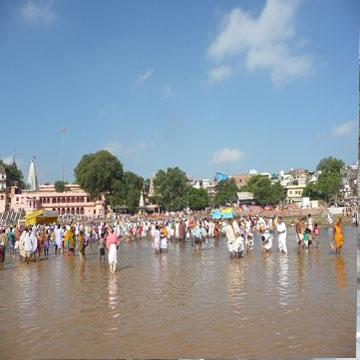
Falgu River (फल्गु नदी)
The Falgu River, which flows through the city of Gaya, is considered extremely important in Hinduism for the ritual of pinddan. This ritual is performed for the peace and salvation of departed souls. According to Hindu belief, performing pinddan on the banks of the Falgu River grants liberation to the souls of ancestors. In this ritual, rice, sesame seeds, and holy water are offered. Due to its mythological origin and association with the Ramayana, the Falgu River is regarded as a divine site for these rituals. Every year, especially during Pitru Paksha, millions of devotees come here to perform pinddan. This river symbolizes the spiritual and devotional connection between the living and the dead.
Importance of Falgu River (फल्गु नदी का महत्व)
The importance of the Falgu River is immense. It is especially revered in Hinduism for pinddan rituals, as it is believed that performing these rites on its banks ensures peace and salvation for ancestors' souls. The river's spiritual significance is deeply rooted in tradition and mythology.
Benefits of Falgu River (फल्गु नदी के लाभ)
The benefits of the Falgu River are many. Performing pinddan here is believed to bring peace and liberation to ancestors' souls, remove obstacles caused by ancestral afflictions, and strengthen the spiritual connection between generations. The river is also a symbol of faith and devotion for millions of devotees.
Rituals of Falgu River (फल्गु नदी की विधि)
The rituals performed on the banks of the Falgu River are quite simple. Devotees offer rice, sesame seeds, and holy water while praying for the peace and salvation of their ancestors. The focus is on devotion and sincerity, following traditional customs.
Materials for Falgu River Ritual (फल्गु नदी की सामग्री)
The materials required for pinddan at the Falgu River are very simple. Generally, rice, black sesame seeds, and holy water are used to prepare the pind and perform the ritual. The emphasis is on faith and devotion rather than elaborate arrangements.